
When Their Story Falls Apart, Mine Finally Makes Sense
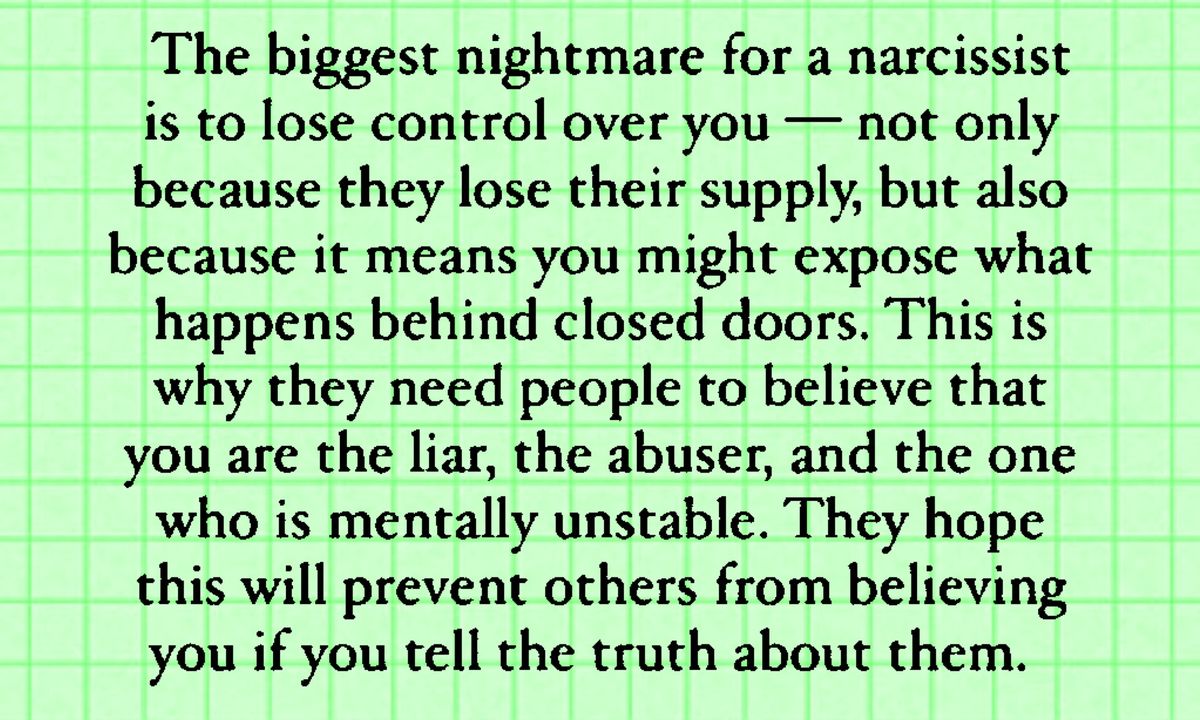
I didn’t understand this at first, but I see it clearly now: the biggest nightmare for a narcissist is to lose control over you – not only because they lose their supply, but also because it means you might expose what happens behind closed doors.
That line hits home for me because I lived through the exact dynamic with the toxic tenants I had to deal with in my last workplace. I didn’t go looking for conflict. I didn’t “target” anyone. I enforced the rules of apartment living – rules that every tenant agrees to when they move in. And when those rules were repeatedly broken, the situation went where it legally had to go: The Landlord & Tenant Board of Ontario.
The tribunal in Ontario reviewed the evidence and decided to evict them. Not me. Not my feelings. Not my imagination. The facts.
They even put the breaking of the rules in writing – flat‑out denying entry after being given a legal notice. And then, when we were in the tribunal hearing in October 2017, they stood there and said, ‘No one was getting in when no one was home.’ They sealed their own fate.
The moment they lost control of the narrative, everything flipped. Suddenly, I became the villain in their story. According to them, I wasn’t enforcing rules – I was discriminating. I wasn’t responding to documented issues – I was “targeting” them. They claimed they did nothing wrong, even though the tribunal’s findings showed otherwise.
While they appealed to the Divisional Court, they lost that too in April 2019. It was after this loss that they created stellareddy.com to smear me personally, as I was no longer working for the property owners.
Legal Actions
- Landlord and Tenant Board Eviction Document released October 3, 2017: TEL-83876-17 (Re), 2017 CanLII 84930 (ON LTB) https://canlii.ca/t/hpbxw
- Divisional Court Document Released April 15, 2019: https://canlii.ca/t/hzs47
- Human Rights Tribunal of Ontario was released on January 22, 2020, after KR & AR didn’t show up for the Hearing by Teleconference: ER v. Liscio, 2020 HRTO 73 (CanLII), <https://canlii.ca/t/j4z4w>, ER v. Liscio, 2019 HRTO 415 (CanLII), <https://canlii.ca/t/hz14r>
And that’s when another part of the poster clicked for me: This is why they need people to believe that you are the liar, the abuser, and the one who is mentally unstable. They hope this will prevent others from believing you if you tell the truth about them.
That’s exactly what happened. The accusations weren’t random – they were strategic.
How I Finally Detached
For a long time, I reacted to every lie they posted on my own site. Every accusation felt like a personal attack I had to correct. I thought if I just explained the truth clearly enough, people would see through it. But that’s not how this dynamic works.
Here’s what finally helped me detach:
1. I stopped trying to “fix” their version of reality
I realized their narrative wasn’t built on facts – it was built on fear of being exposed. No amount of explaining was going to change a story they needed to believe. I was the villian and that was it…
2. I let the documented truth speak for itself
The tribunal decision existed. The Divisional Courts’ decisions are there. The Human Rights Tribunals are there, too. The written notices existed. Their own statements existed. Even the websites were there…
I didn’t need to defend what was already proven.
3. I recognized that their lies were actually evidence
The more outrageous their claims became, the clearer the pattern was. Their behaviour confirmed what I already knew – they were trying to rewrite the story to protect themselves. It was ALWAYS someone else’s fault!
4. I stopped giving them emotional access
I stopped responding to their every post; instead, I use their words to prove what I learn about toxic traits that some people can show. I stopped letting their words dictate my day, as I came to see what everyone else could see: they didn’t know me to write what they did.
That silence wasn’t weakness — it was power.
5. I chose my peace over their chaos
Detaching didn’t mean I didn’t care. It meant I cared about myself more than I cared about correcting their fiction.
The Turning Point
When I finally detached from the chaos, I saw their pattern of behaviour. The louder they became, the more obvious it was that their story couldn’t stand on its own. They needed a villain, and I was the easiest one to cast. But the more they twisted the narrative, the more it revealed what was actually going on. They were lying…
Their story ignored the evidence. Mine was built on it.
Their version required people to overlook the tribunal’s decisions. Mine simply reflected it.
They lied about how their eviction came about, but the truth didn’t need defending – it was already documented.
In the end, their own behaviour became the clearest evidence of what they were doing. It became obvious they were writing about someone they truly didn’t know, as they didn’t know me personally to write what they did. They were tenants from a workplace, nothing more.
And once I stopped living inside their story, I finally got to live inside my own, and it is awesome over here!
Discover more from Stella Reddy's Story of Hope
Subscribe to get the latest posts sent to your email.

