
Understanding Toxic Patterns Through a Real Tribunal Decision
Reading this final Ontario Labour Relations Board decision, shared above, I immediately recognized the same toxic patterns I lived through. The behaviours described in this ruling are not isolated or unique — they are the exact tactics that were used against me, repeated in a different setting, with different targets, by the same people.
Seeing these patterns documented in an official decision confirms what I learned through experience. These individuals repeat the same manipulative strategies wherever they go, and they will weaponize any system that allows them to create conflict.
The Board noted that the applicant “does not acknowledge yelling or shouting at this Panel” and instead reframed his behaviour as justified. That denial is identical to what I faced. No matter how inappropriate the behaviour was, the story was always rewritten to make someone else the problem.
If they continue to misuse the Ontario Tribunal processes, I hope the system ultimately recognizes the pattern and assigns the vexatious litigant designation that fits their behaviour.
The Pattern: Deny, Deflect, Attack
The ruling states that the applicant “does not express remorse or regret for his behaviour, nor does he provide a reasonable explanation for it.” This refusal to take responsibility is a hallmark of toxic behaviour. They used the same tactics with me and others— deny what happened, minimize the harm, and shift the blame onto anyone who challenged them.
The Board also wrote that the applicant “continues to… deny, downplay, and displace blame for his behaviour.” That sentence could have been written about my own experience. It’s the same cycle: create chaos, accuse others of wrongdoing, and then claim victimhood when held accountable.
These patterns don’t change because the venue changes. They follow the person.
Why External Validation Matters for Targets
For people like me who have been targeted by this kind of behaviour, validation from external, authoritative sources is essential. Long-term manipulation creates self‑doubt, and toxic individuals rely on that confusion to maintain control.
When I read a decision where the Board states plainly that the applicant “does not acknowledge yelling… does not express remorse… [and] continues to deny, downplay, and displace blame,” it confirms that the patterns I lived through were real, recognizable, and unacceptable.
Targets are often told they’re overreacting or imagining things, as I was. Seeing the same behaviour documented by a neutral decision-maker restores clarity. It reinforces that my instincts were accurate, my boundaries were reasonable, and the behaviour I endured was part of a larger pattern — not a personal failing.
Escalation Through Manufactured Conflict
The Tribunal ultimately concluded that “it would be impossible to conduct a hearing in this application” because the applicant’s behaviour made a fair process impossible. That line resonated deeply with me. I know what it feels like when someone’s behaviour becomes so disruptive that normal communication breaks down. It was a nightmare that I am glad I woke up from!
My former tenants used the same strategy: overwhelm the system with accusations, create conflict where none existed, and try to control the narrative by exhausting everyone involved. This decision shows that the same tactics were used again — just directed at a different target.
Weaponizing the System
One of the most important lessons I learned is that toxic individuals often try to weaponize complaint systems, legal processes, or tribunals. They file claims not to resolve issues, but to intimidate, punish, or control others.
The Board described the behaviour during the hearing as “disrespectful and disruptive throughout the hearing and abusive towards this panel.” That is the same kind of conduct I faced — only I didn’t have a panel to shut it down.
When the same people behave this way across multiple settings, it’s not a coincidence. It’s a pattern.
What This Means for Landlords, Neighbours, and Community Members
This decision is more than a ruling — it’s a case study in how toxic behaviour shows up in formal processes. For anyone dealing with difficult tenants or individuals who use systems as weapons, this document provides important lessons:
- Toxic behaviour is repetitive. If someone behaves this way with you, they likely behave this way with others.
- Lack of accountability is a major red flag. When someone refuses to acknowledge their actions, the pattern usually continues.
- Systems can recognize manipulation. Even when it feels like you’re alone, decisions like this show that adjudicators can and do see through abusive tactics.
- Your experience is valid. If you’ve dealt with yelling, blame-shifting, or manufactured conflict, this ruling confirms that these behaviours are unacceptable — not just personally, but legally.
This decision validates what I already knew: the behaviour I endured wasn’t normal, wasn’t justified, and wasn’t my fault. It was part of a toxic pattern that these same individuals have carried into other people’s lives and other legal processes.
What Accountability Looks Like for Me
I’ve made mistakes. I’ve reacted poorly to abuse. I’ve had moments where my frustration or fear got the better of me. But adulthood has taught me that what matters most is what I do after the moment passes.
This cyberbullying situation is one where I wanted to blame the circumstances, the stress, or the toxic person’s behaviour — but at the end of the day, I’m responsible for how I show up.
Taking agency doesn’t mean pretending I’m perfect. It means:
- I acknowledge when I’ve crossed a line.
- I don’t rewrite the story to make myself the hero.
- I don’t blame others for the choices I made.
- I learn from the moment instead of doubling down.
That’s the difference between growth and stagnation.
When I Screw Up — And I Will
The Board’s decision makes it clear that refusing to take responsibility has consequences. They wrote plainly that “it would be impossible to conduct a hearing in this application” because the applicant’s behaviour made a fair process unworkable. That’s a powerful reminder that my actions don’t exist in a vacuum either. They affect the people around me, the opportunities available to me, and the outcomes I’m hoping for.
I’ve had to learn that when I make a mistake, the most important thing I can do is pause, reflect, and take ownership. Not because it’s comfortable — it rarely is — but because it’s the only way I can move forward with integrity.
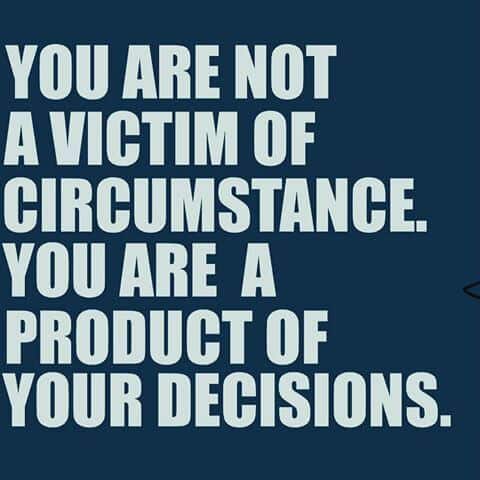
That’s what the poster’s message means to me: I am not defined by what happens to me. I am defined by the decisions I make in response — especially the hard ones.
Moving From Survival to Education
I share this not to relive the past, but to help others recognize the signs sooner than I did from toxic people like this. This ruling is also important in my healing from the toxic behaviour that I never got. It provides clarity of the legal process rules I didn”t get to experience in my cases with the same individuals.
Understanding these patterns is the first step in protecting yourself, setting boundaries, and refusing to be pulled into someone else’s chaos.
This Tribunal decision is a reminder that accountability matters and that toxic behaviour doesn’t become legitimate just because it enters a legal setting. The patterns remain the same — and now, they’re documented in black and white.
Discover more from Stella Reddy's Story of Hope
Subscribe to get the latest posts sent to your email.
