
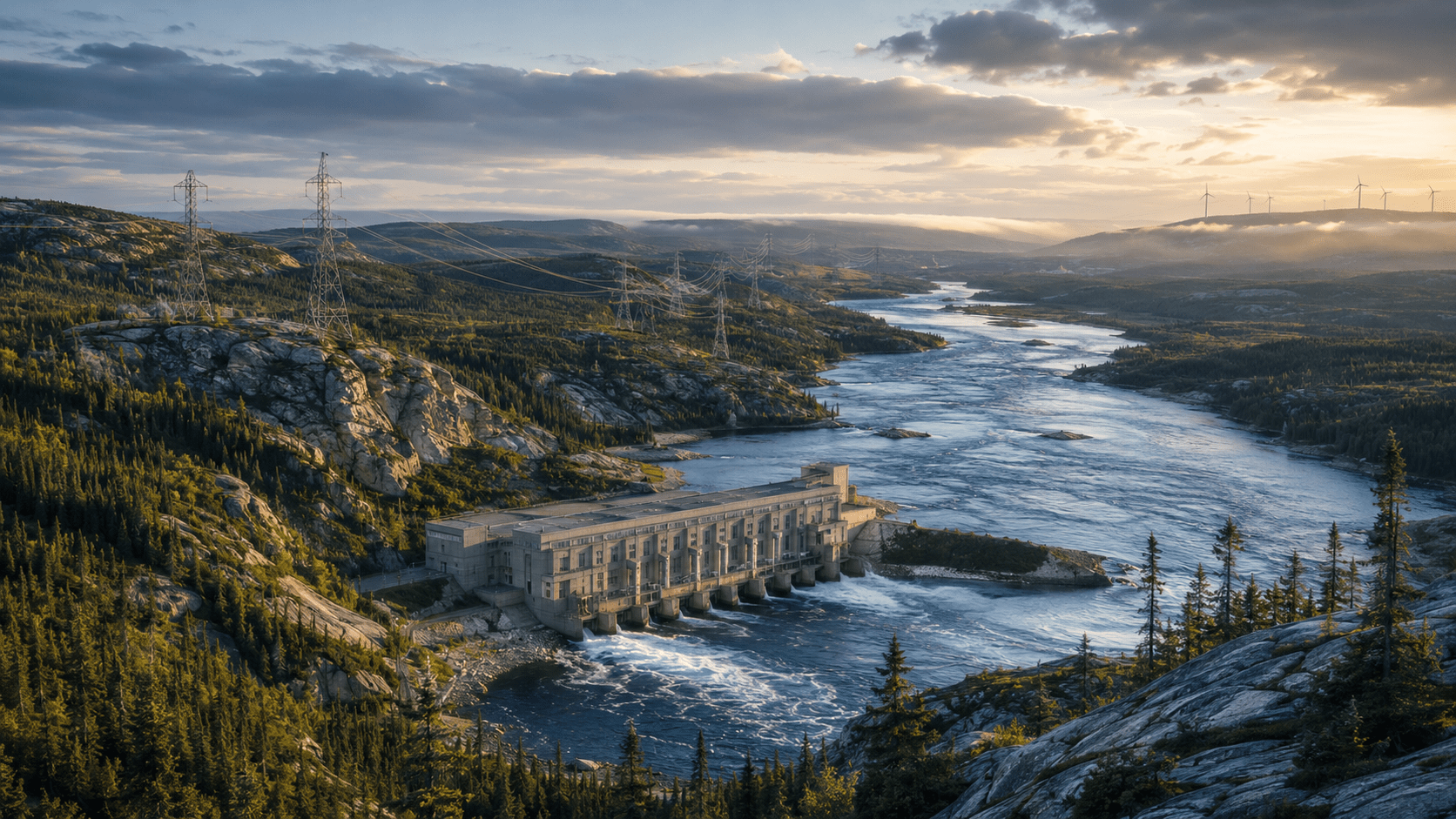
A New Churchill Falls Deal: Hope, Caution and a Chance to Finally Get It Right
This is a topic I find interesting…This news was released today. It is all over the internet, and even on the radio! I decided to do some research, and below are my thoughts.
For more than fifty years, the Churchill Falls agreement has been more than an energy contract in Newfoundland and Labrador. It has been a wound.
It became a symbol of what can happen when a province signs away the long-term value of its own resources without enough protection for the generations that follow. Quebec received electricity from Churchill Falls at a fraction of its market value, while the people of Newfoundland and Labrador watched enormous profits leave Labrador.
That history is why any new hydro agreement with Quebec will be examined closely here. It should be.
On August 17, 2026, the Government of Newfoundland and Labrador announced a new proposed agreement with Quebec and the federal government to replace both the original 1969 Churchill Falls contract and the 2024 Memorandum of Understanding.
The numbers being presented are impressive. The opportunities could be enormous. There are also final legal agreements still to be written and approved.
My first reaction is cautious hope.
I want this agreement to succeed. I want Newfoundland and Labrador to benefit properly from the power generated by our own resources. But our history has taught us something important: celebration should never replace examination.
What Is Being Proposed
According to the Government of Newfoundland and Labrador’s announcement, the new deal would develop Churchill Falls and Gull Island while giving this province more electricity, greater financial value and guaranteed access to transmission through Quebec.
The government says Newfoundland and Labrador would be able to retain up to 2,350 megawatts of power from Churchill Falls and Gull Island. That is 360 megawatts more than the amount proposed in the 2024 MOU.
The federal government is also proposing to support a new 2,000-megawatt wind project near Churchill Falls. Newfoundland and Labrador would receive 400 megawatts of its output. Together, those changes would give the province access to 760 megawatts more power than under the previous proposal.
That matters because electricity is not valuable only when it is sold. It can also be used here to attract industry, support mining and create lasting economic development in Labrador and throughout the province.
The proposed arrangement would give Newfoundland and Labrador a choice: use its allotted Churchill Falls power for development at home or sell it. If it is sold to Hydro-Quebec, the announcement says Quebec would pay a 150 percent premium over the base power-purchase price.
That ability to choose may be one of the most important differences in the new proposal.
The Financial Claims Are Enormous
The provincial government values the new agreement at $49 billion in 2026 net-present-value terms, compared with the $36-billion valuation attached to the 2024 MOU. In nominal dollars spread over the life of the agreement, it estimates a total value of $273 billion.
Those figures sound extraordinary, especially in a province that has lived with the consequences of the old Churchill Falls contract for so long.
But large numbers stretched across decades need careful explanation.
Net present value and nominal value are not the same thing. A dollar expected many years from now is not worth the same as a dollar received today. Forecasts also depend on assumptions about prices, construction costs, financing, inflation, demand and project timelines.
I am not dismissing the numbers. I am saying that we deserve to understand what sits underneath them.
How much money would arrive, and when? What costs and debts would Newfoundland and Labrador carry? What risks would remain if a project were delayed or exceeded its budget? What assumptions were used to calculate the stated value?
These are not negative questions. They are responsible ones.
Transmission Could Change Everything
One of the greatest improvements appears to be guaranteed access to transmission.
Geography has always shaped Newfoundland and Labrador’s choices. Hydroelectric power generated in Labrador cannot simply jump over Quebec on its way to major markets.
Under the proposed deal, Newfoundland and Labrador would receive a portfolio of 985 megawatts of transmission access to markets outside Quebec, including New York, New England, Ontario and other destinations.
That includes access connected to the Champlain Hudson Power Express and the New England Clean Energy Connect. Some electricity would reportedly be sold at the same price Hydro-Québec receives, while other power could be sold at market-based prices.
If those rights are firm, affordable and enforceable, they could reduce our dependence on Quebec as the only practical buyer. That is a major issue because having a resource is not enough. You also need a reliable route to market and the freedom to make your own decisions about where it goes.
The fine print will matter here too. We need to know how the transmission capacity is allocated, what it will cost, when it becomes available and what happens if the lines are congested.
Jobs and Development at Home
The proposed agreement guarantees that 85 percent of the person-hours involved in constructing Gull Island would remain within Newfoundland and Labrador. Priority would go to qualified Labrador Innu, qualified Labradorians and qualified Newfoundlanders, in that order.
The government estimates that as many as 5,000 people could work at the Gull Island site during peak construction.
That is encouraging, but I hope the benefits extend beyond temporary construction work.
I want to see apprentices trained, local companies awarded contracts, and communities strengthened for the long term. I want Labrador to receive lasting infrastructure and opportunity from development taking place in Labrador.
The proposed federal support includes $1 billion toward a Labrador West transmission line. That could help unlock mining and other industrial projects in the Labrador Trough. If handled properly, the value of this agreement may extend well beyond the sale of electricity.
The Federal Government Is Now at the Table
Another significant change is the direct involvement of the federal government.
Ottawa is proposing support valued at $3.5 billion, including financing for wind development, support for Labrador transmission, assistance for Churchill Falls and Gull Island work, and a federal loan guarantee intended to reduce financing costs and project risk.
Federal participation could make major projects easier to finance and connect them to Canada’s broader clean-energy goals.
Still, the details matter. A loan guarantee is different from a grant. An equity investment is different from a direct payment. Each commitment should be explained in plain language so people can understand who owns what, who carries the risks and who receives the returns.
A Rebate People Would Actually Feel
The government has also promised a 15 percent Churchill River Electricity Rebate for residential ratepayers on their first 2,000 kilowatt-hours of electricity use each month.
It estimates average savings of $351 a year.
That would be a welcome, visible benefit for people who have heard about the enormous value of our energy resources while opening electricity bills that keep getting harder to pay.
However, the rebate would begin only after the definitive agreements are finalized. It will be important to know whether it is permanent, how it will be funded and whether future governments could change or cancel it.
Why the 2024 Proposal Was Reconsidered
This new agreement did not appear out of nowhere.
The 2024 MOU was promoted as a historic correction to the 1969 contract. After a change of government, an independent committee reviewed it and concluded that, despite some benefits, it was not configured in the overall best long-term interest of Newfoundland and Labrador.
The Independent Churchill River Review Committee identified concerns about limits on our ability to use Churchill Falls power within the province, pricing models, governance, debt exposure and restricted transmission access.
The new proposal appears designed to address several of those concerns. It offers more power for our own use, greater stated value, guaranteed transmission access and federal support.
That is encouraging. It also proves why independent review matters.
Governments should not fear scrutiny of agreements this important. If a deal is strong, examination should make that strength easier to see. If weaknesses exist, it is better to find them before Newfoundland and Labrador is locked in for another generation.
The Innu Nation Must Be a Full Partner
No discussion of hydroelectric development in Labrador is complete without the Innu Nation.
The announcement says the provincial government has begun discussions about opportunities for the Innu Nation to participate as a full partner. That work must be meaningful.
Development on Indigenous lands cannot be treated only as a financial arrangement between provincial governments and power corporations. Consultation, consent, environmental protection, ownership and benefit-sharing all belong at the centre of the process.
The people most directly connected to the land and waters must have a genuine voice in what happens next.
We Have Reasons to Be Hopeful—and Reasons to Read Every Page
I do not want Newfoundland and Labrador to remain trapped forever by the anger created by the 1969 agreement.
We cannot change what was signed then. We can learn from it. Isn’t that the point of history?
The proposed deal contains reasons for optimism: more power retained by this province, access to outside markets, greater financial value, jobs, federal investment and a direct electricity rebate.
It could help turn Labrador’s enormous clean-energy resources into economic opportunity for the people who live here. It could give Newfoundland and Labrador more control over its own future and begin a healthier relationship with Quebec.
But this is not the moment to put away the magnifying glass.
The government’s own announcement says technical and legal work is still required to turn these agreements into final binding documents. Until those documents are completed and publicly examined, I consider this a promising framework—not the finished story.
Before anything becomes binding, I want to see full independent analysis of the pricing, debt, ownership, governance, transmission rights, construction risks, environmental responsibilities and exit provisions.
I want the people of this province to have enough time and information to understand what is being signed in our name.
That is not cynicism. That is what history has taught us.
This Time, the Resource Must Work for Us
For generations, Churchill Falls represented power leaving Labrador and prosperity flowing elsewhere.
Perhaps this agreement can begin to change that.
Perhaps we can build a relationship in which Quebec receives the reliable clean energy it needs while Newfoundland and Labrador receives fair value, real control and opportunities that last.
A good agreement does not require one side to lose everything so the other can win. It requires honest terms, balanced risks and benefits that both sides can defend openly.
I am hopeful about what was announced.
I am also watching carefully.
Newfoundland and Labrador has been told before that a hydro agreement would secure our future. This time, we must make certain that the final contract says what the headlines promise.
Our children and grandchildren should inherit the benefits of the Churchill River—not another warning from history.
Discover more from Stella Reddy's Story of Hope
Subscribe to get the latest posts sent to your email.

