
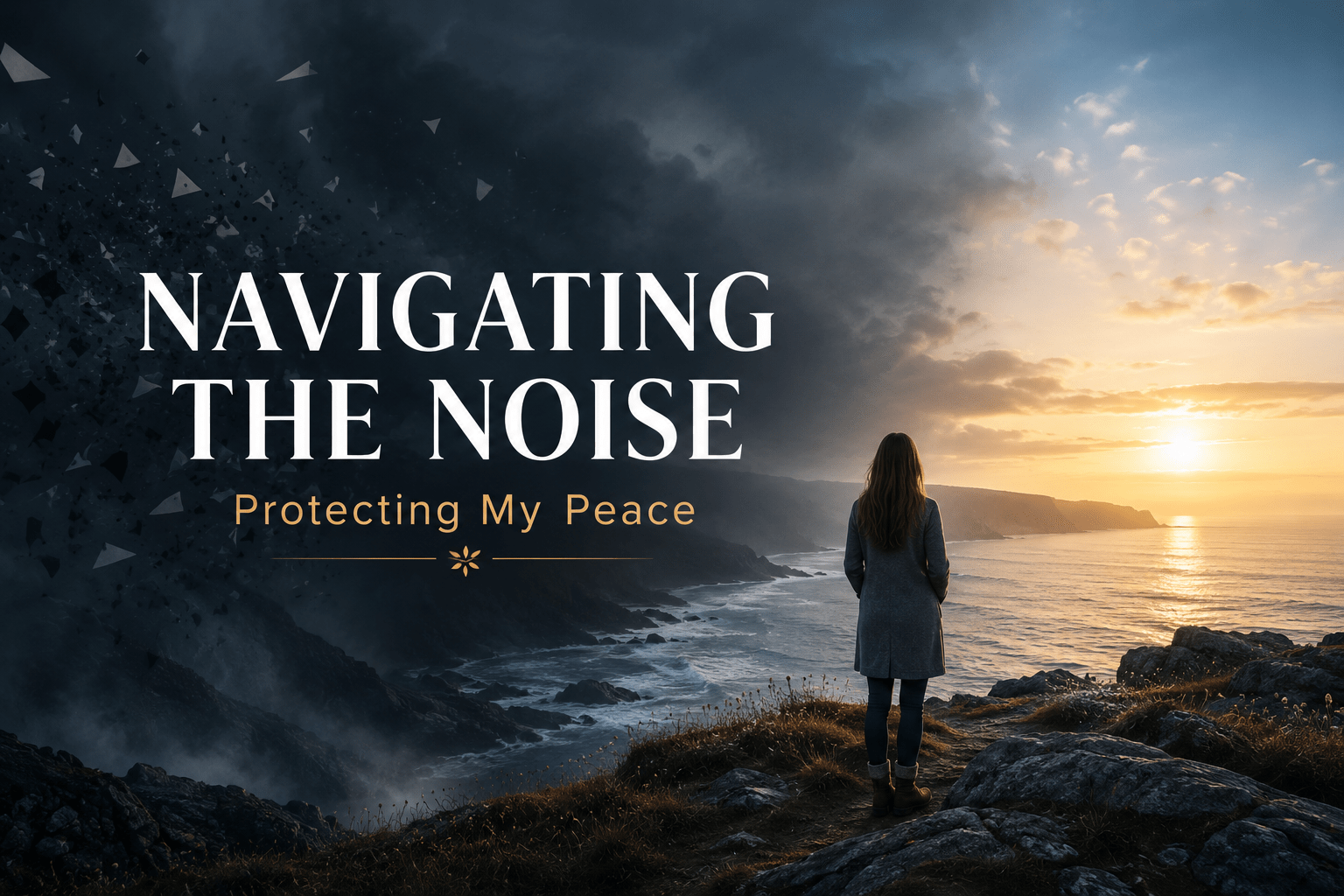
Navigating the Noise: How I Learned to Deal with Toxic People and Protect My Peace
For 10 years, I lived with the consequences of a conflict that began while my husband and I were working in an apartment building in Ontario.
What started as a landlord-and-tenant dispute in 2016 eventually grew far beyond the original issues. There were disagreements involving access to a rental unit, balcony repairs, parking, locks, building rules, and eventually eviction proceedings.
The tenancy ended, the tenants appealed, and the Divisional Court dismissed that appeal. The court found that the hearing had been fair and stated that there was no direct evidence that the eviction application was racially motivated.
I once believed the legal decisions would bring the matter to an end. They did not.
The conflict followed me online, where websites, articles, documents, accusations, and personal information were published about me. Over time, the material expanded beyond the original tenancy dispute. My work, my husband, my family, my health, my finances, my political opinions, my websites, and my new life in Newfoundland all became subjects for public commentary. Even my home address was eventually published.
For a long time, I responded because I felt I had to defend myself. I believed that if I explained what happened, shared the documents, or challenged every false or misleading statement, people would finally understand. Instead, I became caught in a cycle.
They published something about me. I reacted. My reaction became material for another publication. I tried to have websites removed, and sometimes I succeeded, but the conflict kept finding new places to appear.
Looking back, I can see how much of my energy was consumed by that cycle. I am glad those days are gone now.
Learning how to deal with toxic people and toxic dynamics has not been a simple matter of blocking someone and forgetting what happened. It has required me to examine what others did, how I responded, what I would do differently today, and why protecting my peace has become more important than winning another argument.
Recognizing the Red Flags: What “Toxic” Really Means
I use the word toxic carefully these days.
Not every difficult person is toxic. Not every disagreement is abuse. People can become angry, make mistakes, say something insensitive, or remember an event differently without being deliberately harmful. I have certainly made mistakes of my own.
During the years when I felt attacked and constantly watched, I sometimes reacted from anger, fear, frustration, and exhaustion. I used words I would not use today. There are responses I would write differently and situations I would handle with more restraint. Acknowledging that does not erase what was done to me. It means I am willing to look honestly at my own behaviour while refusing to accept responsibility for someone else’s choices.
To me, a toxic dynamic is revealed through repeated patterns.
One warning sign is when a disagreement is never allowed to end. The subject may change, but the conflict continues. Old statements are recycled, new interpretations are added, and almost anything the targeted person says or does becomes further material.
Another sign is when the conflict keeps expanding.
A dispute about an apartment should not require years of commentary about someone’s relatives, health, employment, marriage, finances, political views, or home address. When every part of a person’s life becomes fair game, the original issue is no longer the only issue.
I also learned to recognize provocation followed by blame.
Someone may repeatedly publish about you, contact others, make accusations, or intrude into your personal life. If you eventually react emotionally, that reaction may be presented without the history that led to it. The response becomes the story, while the repeated behaviour that provoked it disappears into the background. That does not mean every reaction is justified. We are still responsible for how we respond.
However, context matters.
The greatest red flag for me was the realization that nothing I said would ever be enough.
Every explanation created another argument. Every correction opened another door. Every attempt to defend myself kept me connected to people and events I desperately wanted to leave behind.
The Art of Disengagement: How I Began Creating Distance
Disengagement did not come naturally to me. I have a strong sense of fairness. When someone says something about me that I believe is untrue, misleading, or missing important context, my instinct is to correct it. When my character is attacked, I want to show the evidence and explain what happened.
For years, I thought silence would make me appear guilty.
I understand now that silence can mean many things. Sometimes it simply means I recognize that another response will not produce anything useful.
Disengagement is not an admission. It is a decision.
One of the first things I had to do was stop answering every accusation. I began asking myself a few simple questions:
- Does this genuinely require a response?
- Have I already addressed it?
- Is the person asking in good faith?
- Will responding correct the record, or will it keep the argument alive?
- How will I feel after spending another hour on this?
- Is this where I want my energy to go today?
Those questions helped me separate necessary responses from emotional impulses.
I also stopped believing that I needed to persuade people who had already made up their minds about me. If someone has spent years presenting me through the worst possible interpretation, one more explanation from me is unlikely to transform the situation.
My website has given me a place to tell my own story, but I no longer want that story to consist only of responses to other people.
I can publish documents, explain the public record, acknowledge my own words, and correct significant misinformation without allowing someone else to choose the direction of my life or my writing.
That is an important difference.
Building My Shield: Setting Emotional Boundaries
The strongest boundary I have developed is understanding what belongs to me and what does not.
My behaviour belongs to me. My words belong to me. My mistakes belong to me. My healing belongs to me.
Someone else’s obsession, assumptions, accusations, or decision to keep publishing does not belong to me.
For a long time, I carried all of it as though I were responsible for resolving everything. I felt pressure to answer every claim, correct every impression, and monitor what was being said. That was an impossible job.
Emotional boundaries taught me that I could care about my reputation without allowing strangers to control my nervous system. I could preserve evidence without reading it every day. I could address something serious without spending weeks living inside it.
I could also decide which details of my life remained private.
When a person has experienced years of unwanted attention, privacy becomes more than a preference. It becomes part of feeling safe again. I no longer believe that everyone who asks a question is entitled to an answer. I do not have to share information simply because someone else is determined to find it.
My boundaries now include:
- Not responding immediately when I am upset.
- Keeping records without repeatedly reliving them.
- Refusing to participate in circular arguments.
- Limiting access to my personal life.
- Blocking accounts when contact becomes intrusive.
- Correcting important facts without answering every insult.
- Taking concerns to the appropriate platform or authority when necessary.
- Stepping away from the computer when an issue begins consuming my day.
A boundary is not an attempt to control another person. I cannot force anyone to stop thinking, writing, or speaking about me. My boundary determines what I will do.
That may mean documenting the behaviour, reporting it through the proper channel, publishing one factual response, or refusing to respond at all.
When to Walk Away: Choosing My Well-Being
Walking away was difficult because I wanted an ending that felt fair.
I wanted the documents to settle the disagreement. I wanted people to recognize how far the situation had travelled from the original tenancy dispute. I wanted an acknowledgement that involving my family, health, work, and Newfoundland life had crossed a line. I eventually had to accept that I might never receive that acknowledgement.
Closure does not always come from the people who hurt us. Sometimes we create it by deciding that they will no longer be the centre of our attention.
Walking away does not mean pretending nothing happened. It does not mean destroying the evidence or surrendering my right to tell my story. It means I no longer organize my daily life around the possibility of another attack.
I know it is time to step back when I notice myself:
- Rehearsing arguments in my mind.
- Checking repeatedly for new publications.
- Losing sleep over what strangers might believe.
- Neglecting the good parts of my present life.
- Writing only to defend myself.
- Feeling pulled back into the person I was during the original conflict.
- Giving more attention to hostile people than to the people I love.
Those are signs that the past is taking up too much space in my present. My well-being matters more to me now. That is not selfish. It is necessary.
Reclaiming My Space: Healing After Years of Conflict
Moving to Newfoundland gave me physical distance from Ontario, but emotional distance took much longer. Changing my location did not instantly remove the fear, anger, or alertness I had developed. When a conflict has followed you online, it can feel as though it could appear anywhere at any time.
I had to teach myself that I was allowed to live even while unwanted material still existed online.
I did not need to postpone my happiness until every webpage disappeared. I did not need universal agreement before I could move forward. I did not need strangers to approve of me before I could enjoy my own life.
Healing began in ordinary moments. It was walking near the ocean and noticing the weather rolling in. It was taking photographs of the natural beauty around me. It was listening to music at home, writing about something unrelated to conflict, learning something new, and spending quiet time with hubby and Hope. Those moments may sound small, but they brought me back to myself.
For years, so much of my identity was tied to what happened in that apartment building and what was later published online. I sometimes felt as though I had become a character in someone else’s story. Reclaiming my space meant remembering that I had an entire life before that conflict—and that I still had a life waiting for me after it.
I am a wife, a writer, a photographer, a learner, and a woman who has survived serious illness and many difficult experiences. I am interested in psychology, healthcare, music, politics, nature, mindfulness, and personal growth. I am much more than the worst thing someone has written about me.
Taking Responsibility Without Carrying Everything
One of the biggest changes in me is that I no longer believe defending myself requires pretending I did everything perfectly. I did not.
I became angry. I reacted publicly. I sometimes wrote while overwhelmed. I used language that I now recognize as unhelpful or insensitive. At times, I contributed to the cycle by continuing to respond. I can acknowledge that.
Personal growth is not saying, “I did nothing wrong.” It is being able to say, “This is what happened to me, this is how I responded, and this is what I have learned.”
I can take responsibility for my part without accepting every allegation made about me. I can regret certain words without agreeing with every interpretation attached to them. I can recognize another person’s rights without surrendering my own.
That is the balance I work toward now.
These days, I prefer to focus on observable behaviour, published material, official decisions, and my own documented words. I try not to diagnose people or claim that I know what is happening inside their minds.
I can describe what someone did and explain how it affected me without pretending I can know every motive behind it. That approach is more honest, more responsible, and much healthier for me.
I No Longer Live in Constant Reaction
For a long time, my emotional state was influenced by what someone else had published. A new page could change my entire day. A new accusation could send me searching through old documents. A mention of my name could pull me back into events that had happened years earlier.
That is what living in reaction looked like for me.
Today, I am learning to live in presence. Presence means noticing what is happening in my actual life rather than constantly preparing for what someone online may do next. It means giving my attention to the people, places, and experiences directly in front of me.
It means remembering that yesterday is gone and tomorrow is not here yet. I still care about the truth. I still believe I have the right to tell my story and respond when something serious requires it. Protecting my peace does not mean becoming passive or allowing people to do whatever they want.
It means responding thoughtfully instead of automatically.
There is a difference between standing up for myself and remaining trapped in a fight. I did not always know that difference. I know it now.
My Peace Is No Longer Available to Everyone
Learning how to deal with toxic people has taught me that not every accusation deserves my energy, not every question is asked honestly, and not every conflict can be resolved through another conversation.
Some situations require evidence and action. Others require distance and silence. Wisdom is learning to recognize the difference.
I cannot control what other people choose to publish. I cannot force anyone to understand me, apologize to me, or leave the past where it belongs. What I can control is the life I build now.
I can continue growing.
I can write about healing, resilience, rights, mindfulness, and the lessons I have learned. I can acknowledge where I fell short while remaining honest about what I experienced. I can protect my privacy and refuse to provide endless access to people who have repeatedly misused it. Most importantly, I can decide that the conflict does not get to consume the rest of my life.
My peace was not handed to me. I had to fight my way back to it, one boundary and one quiet day at a time. Now that I have found more of it, I protect it carefully.
The noise may still exist somewhere beyond me, but I no longer have to invite it into my home, my thoughts, or every moment of my day. This is my life.
I am here in Newfoundland, moving forward, learning from the past and becoming more grounded in who I am today.
I am not living in reaction anymore. I am learning to live in peace.
Discover more from Stella Reddy's Story of Hope
Subscribe to get the latest posts sent to your email.
