
Personal Rant: The United States Is Acting Like a Global Bully — And the World Is Starting to Say So
Around the world, I see more people are waking up to a pattern that many of us have seen for years: the United States is acting like a bully on the global stage. Not every American, not every community — but the machinery of U.S. power, the tone of its politics, and the behaviour of many of its loudest citizens have taken on the unmistakable shape of dominance, pressure, and entitlement.
I say this not as an academic or a diplomat, but as someone with lived experience recognizing bullying tactics. Once you’ve lived through these tactics, you can’t unsee them. And right now, those same tactics are visible in how the U.S. treats Canada — and how it treats much of the world. I can feel the angst, and I find it very sad.
Trust, once fractured, rarely returns in its original form. What I see now — in politics, in communities, even between nations — is a deep weariness born of repeated disappointments. Each broken agreement, each act of manipulation, each moment of dominance disguised as diplomacy chips away at the foundation that once held people together. How can you trust the US to honour any of its agreements when they broke so many already?
For me, the erosion feels personal and global at once: the same patterns of bullying and betrayal that I’ve lived through echo in the way powerful countries treat others. And when trust is replaced by vigilance, rebuilding it becomes almost impossible. I’m not sure it will return — not until honesty and respect become stronger than fear and control.
The United States may be powerful, but it isn’t omnipotent. Power has limits, especially when it’s exercised through pressure rather than partnership. History shows that even the strongest nations depend on cooperation, trust, and legitimacy to sustain influence. When those erode, raw strength starts to lose its effectiveness.
The U.S. can impose policies, but it can’t control how other countries feel, respond, or adapt. Here in Canada, even if we remove the US alcohol ban, it won’t make Canadians buy the products, just as they can’t make us travel to the US or buy other US products in our stores. I’ve watched the US reverse many of its environmental polices, especially under food production, so eating their food has become more scary for me. Canadians make their own decisions on where they want their money to go, not US policies.
Canada, and much of the world, have learned to stand firm, proving that dominance doesn’t equal control. True leadership comes from respect, not fear — and that’s where I find the U.S. is struggling today.
The Pattern Is Familiar: Pressure, Threats, and Entitlement
Bullying is not defined by size alone. It’s defined by behaviour.
And the behaviour many countries experience from the U.S. looks like this:
- Pressure tactics — “Do what we want or face consequences.”
- Economic threats — tariffs, sanctions, market access used as weapons.
- Public shaming — calling out allies in speeches, interviews, or social media.
- Unilateral decisions — acting first, expecting others to adjust.
- Demanding concessions — without offering reciprocity.
- Assuming global leadership — even when other countries disagree.
These are not isolated incidents. They form a pattern — one that smaller countries recognize instantly.
Canada’s Experience: A Front‑Row Seat to U.S. Dominance
Canada has always lived beside a giant. But in recent years, the tone has shifted from partnership to pressure.
We’ve seen:
- tariff threats
- accusations of “taking advantage”
- demands for policy changes
- pressure on defense spending
- public rhetoric framing Canada as a problem
Canada responds with calm, rules‑based diplomacy — but the pattern is unmistakable. It’s not cooperation. It’s coercion.
And in Newfoundland & Labrador, we know this behaviour. We’ve lived through powerful outsiders trying to dictate terms. We know what dominance looks like. We know what it feels like. I know what it feels like.
It’s Not Just Canada — The World Sees It Too
Countries across the globe have reported similar experiences:
Economic bullying
- Mexico
- South Korea
- Japan
- EU members
All have faced tariff threats or forced renegotiations.
Security bullying
- NATO allies pressured publicly to spend more. Specifically spend it in the US.
- Partners criticized for not aligning perfectly with U.S. priorities.
Diplomatic bullying
- Countries sanctioned or isolated for disagreeing with U.S. positions.
- Allies publicly scolded for independent decisions.
Cultural bullying
Some U.S. citizens — not all, but enough to be noticeable — express:
- entitlement to global leadership
- dismissal of other countries’ sovereignty
- assumptions that U.S. interests should come first everywhere
This creates the perception of a nation that expects compliance and reacts strongly when it doesn’t get it.
Why This Matters: Bullying Is Not Leadership
When a superpower uses pressure instead of partnership, it destabilizes trust.
Countries begin to:
- diversify alliances
- strengthen sovereignty
- push back publicly
- rely more on international law
- reduce dependence on U.S. systems
The world is changing. Power is shifting. And bullying is becoming less effective every year.
My Message to the World
Here is the heart of what I want people to understand:
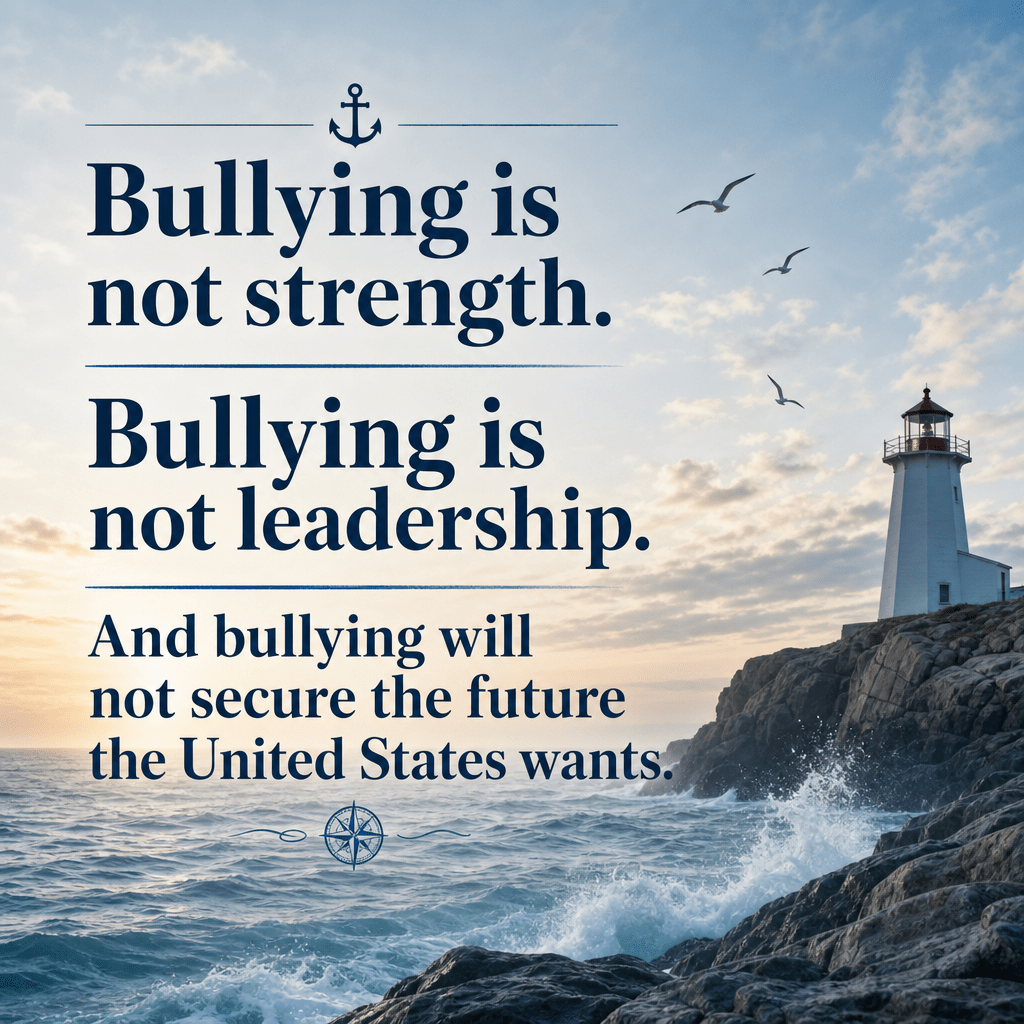
“Bullying is not strength. Bullying is not leadership. And bullying will not secure the future the United States wants.”
Canada won’t bend to it. Newfoundland won’t bend to it. And increasingly, neither will the rest of the world.
The U.S. can still be a global leader — but only if it remembers that leadership is earned through respect, not demanded through dominance.
Discover more from Stella Reddy's Story of Hope
Subscribe to get the latest posts sent to your email.

